Spoiler & Content Warning: This review contains major spoilers and discusses the film’s extremely graphic depiction of execution by stoning, domestic abuse and violence against women.
There are films that upset you while you’re watching them, and then there are films whose images remain in your head long afterwards.
The Stoning of Soraya M. falls firmly into the second category for me.
Based on Freidoune Sahebjam’s account of the 1986 death of Soraya Manutchehri in Iran, the film tells the story of a woman accused of adultery after her husband conspires against her. Soraya is played by Mozhan Marnò, while the extraordinary Shohreh Aghdashloo plays her aunt Zahra.
Knowing that the film is based upon the reported death of a real woman makes what follows infinitely harder to watch.
A Woman Condemned Because Her Husband Wants Another Life
What infuriated me most wasn’t simply the punishment. It was watching the accusation being manufactured.
Soraya’s husband Ali, played brilliantly and repulsively by Navid Negahban, wants rid of his wife so that he can marry a 14-year-old girl. Rather than behaving like a remotely decent human being, he conspires to have Soraya accused of adultery.
The allegation is built upon manipulation, intimidation and lies.
Soraya isn’t killed because overwhelming evidence proves she committed some terrible crime.
She’s killed because enough people are prepared to lie, remain silent or look the other way.
That is what makes the story so utterly horrifying.
The Men Manufacture Their Own Version of the Truth
One of the most disturbing aspects of the film is watching the accusation gradually being constructed around Soraya.
After the wife of a local widower, Hashem, dies, Soraya agrees to work in his home, cooking and caring for his young son in return for money. There is nothing inherently sexual about the arrangement.
Ali nevertheless sees his opportunity.
Hashem is pressured into supporting the adultery allegation, helping transform an innocent working arrangement into supposed evidence against Soraya.
And once enough people repeat a lie, suddenly the lie becomes the accepted truth.
That’s terrifying.
Zahra Is Brave – But I Was Also Angry With Her
Shohreh Aghdashloo gives an absolutely phenomenal performance as Zahra.
She ultimately becomes Soraya’s greatest defender. She challenges what is happening, confronts the men responsible and makes sure journalist Freidoune Sahebjam learns what happened to her niece.
Without Zahra, perhaps the outside world would never have known Soraya’s story.
But my feelings towards her were complicated.
Earlier in the film, Soraya asks whether she and her daughters can stay with Zahra.
Zahra refuses.
That really bothered me.
Obviously Zahra herself exists within an oppressive and frightening environment, and she subsequently demonstrates extraordinary courage trying to save Soraya.
But I couldn’t stop thinking:
What if she’d simply said yes?
What if Soraya and her daughters had been given somewhere safe to go?
Would any of this have happened?
We’ll never know. But it prevented me from seeing Zahra as completely blameless. She eventually fought incredibly hard for Soraya, but I couldn’t help wishing she had done more when Soraya first asked her for help.
The Children Broke My Heart
Perhaps the most disturbing element apart from Soraya’s execution itself is the involvement of her children.
Watching her sons being manipulated into participating in violence against their own mother is horrifying.
My immediate emotional reaction was anger:
That’s your mother. Just refuse to throw the stone.
And then you have to remember that these are children.
Their father has been influencing them and teaching them how they are supposed to regard their mother. Instead of protecting his sons from something horrific, he draws them into it.
To me, that is another form of abuse.
He isn’t merely destroying Soraya. He’s teaching his sons to become desensitised to cruelty and to participate in the humiliation and destruction of their own mother.
Seeing one of the children crying after Soraya’s death was heartbreaking.
Why cry afterwards?
Because underneath everything they’d been told and everything they’d been pressured into doing, she was still their mother.
Those children would have to live with what happened for the rest of their lives.
The Woman Who Couldn’t Wait for the Stoning to Begin
There was another character who particularly angered me, despite not being central to the story.
One of the village women—the gossipy woman who has already helped spread hostility towards Soraya—appears almost impatient for the execution to begin.
As Soraya waits to die, this woman seems eager for that first stone to be thrown.
I found her absolutely awful.
And perhaps she’s actually one of the most important minor characters in the film.
Because Soraya’s persecution isn’t exclusively being driven by men.
Here is another woman watching a fellow woman—a mother and neighbour—about to be brutally killed, and rather than showing compassion or questioning whether the accusations might be false, she appears caught up in the punishment.
Where was the humanity?
Where was the thought:
What if they’re wrong?
It demonstrates something frightening about mob mentality. Once a community has collectively decided that somebody is guilty, that person can seemingly stop being a human being in their eyes.
Soraya becomes the target.
And suddenly people who didn’t manufacture Ali’s original lie become participants in its consequences.
He Asked God for a Sign – Then Ignored It
One character whose cowardice particularly frustrated me was Ebrahim, the village mayor.
He clearly has doubts about Soraya’s guilt. Before allowing the execution to proceed, he actually prays to God and asks for a sign if what they’re about to do is wrong.
Then the circus arrives.
It appears in the village unexpectedly before the execution begins. Considering what Ebrahim has literally just asked for, how much more of a sign does he need?
But it gets worse.
When Soraya’s own father is ordered to throw the first stones, he repeatedly misses her. Someone in the crowd even points out that this could be a sign that Soraya is innocent.
Still Ebrahim does nothing.
That made me incredibly angry.
You cannot ask God for guidance and then conveniently disregard the answer because acting upon it would require courage.
Ebrahim had authority. He had doubts. He knew there were serious questions surrounding the accusation. He asked for a sign—and when events unfolded that could hardly have been more symbolically obvious, he still allowed Soraya to be killed.
Ali may have engineered the lie, but people like Ebrahim allowed that lie to become a death sentence.
For me, that’s one of the film’s strongest messages: evil doesn’t always require everyone involved to be evil. Sometimes it only requires an evil person to be surrounded by people who know something is wrong but lack the courage to stop it.
The Stoning Scene Is Almost Unbearable
I knew the title of the film.
I knew exactly what was coming.
I still wasn’t prepared for it.
Soraya is buried in the ground, her arms tied so she can’t even protect her face and body, and subjected to repeated stones while members of her own community participate in killing her.
The sequence is prolonged and extremely graphic.
I was genuinely upset watching it.
But what makes it so difficult isn’t simply the physical violence.
It’s the powerlessness.
We know the accusation was manufactured.
Zahra knows.
Ali certainly knows.
Hashem knows the truth about his relationship with Soraya.
And still it happens.
There were moments when I desperately wanted somebody—anybody—to simply put down their stone and say:
No. I’m not doing this.
Instead, once the process begins, individual responsibility seems to disappear into the crowd.
And then comes perhaps the most sickening moment of all. After the horrific barrage of stones, Ali moves closer to Soraya and realises she is still alive. She opens her eyes.
For one tiny moment, you almost expect somebody to recognise the sheer horror of what they have done and stop.
They don’t.
The murderous mob throws more stones.
I found that absolutely heartbreaking. By this point these people seem completely desensitised to the suffering of another human being. There is no mercy, no compassion and seemingly no recognition that the bloodied woman in front of them is a mother, daughter and neighbour whose supposed “crime” was built upon lies.
Heartless, desensitised, cruel cowards.
That moment affected me enormously because Soraya opening her eyes gives everyone one final opportunity to rediscover their humanity. Instead, they choose to finish killing her.
Her Own Father
One of the most devastating moments comes when Soraya’s elderly father is expected to throw the first stones.
Watching a father standing opposite his daughter in that situation is almost impossible to comprehend.
Then her sons become involved.
It feels as though Soraya isn’t merely being physically killed. Everything that should represent family, protection and love is being systematically turned against her.
And the person primarily responsible for creating that nightmare—her husband—is standing there watching it happen.
Capital Punishment and Stoning Are Not the Same Thing to Me
I should make my own position clear because I personally support capital punishment for the most serious crimes.
But that doesn’t make what happens in this film remotely acceptable to me.
There is an enormous difference between believing that the ultimate punishment may be justified following overwhelming evidence, proper due process and conviction for an exceptionally serious crime, and watching an innocent human being slowly battered to death following an accusation manufactured through lies and intimidation.
Death by stoning should not exist.
The deliberate prolonging of someone’s suffering is horrific.
And throughout the film I kept thinking that if anybody deserved to face justice, it was Ali, not the innocent woman whose death he helped engineer.
One Evil Man Isn’t Enough
It’s tempting to blame everything entirely upon Ali.
He certainly deserves enormous responsibility.
But The Stoning of Soraya M. becomes considerably more frightening when you realise that one evil man couldn’t have accomplished this alone.
Other people have to cooperate.
Someone has to repeat the allegation.
Someone has to provide false testimony.
Someone has to accept obviously questionable evidence.
Someone has to prepare the execution.
And eventually, people have to pick up the stones.
That’s perhaps the most frightening message I took from the film.
It isn’t simply asking how an extraordinarily cruel individual can exist.
It’s showing how other people can become participants when authority, fear, gossip and group mentality overwhelm their individual consciences.
They Could Kill Soraya – But They Couldn’t Silence Her
There is one victory in this otherwise devastating story.
Zahra tells the truth.
She recounts Soraya’s story to French-Iranian journalist Freidoune Sahebjam, played by Jim Caviezel, and makes sure his recording leaves the village.
Sahebjam subsequently published La Femme Lapidée (The Stoning of Soraya M.), which became an international bestseller. The book was reportedly banned in Iran, as was the subsequent film.
There is something incredibly powerful about that.
Soraya’s killers could end her life.
They couldn’t completely erase what happened to her.
Decades later, people around the world are still learning her name and becoming angry about the injustice portrayed in her story.
My Verdict
The Stoning of Soraya M. is an excellent film that I genuinely don’t know whether I could bring myself to watch again.
That’s not criticism.
It’s probably one of the greatest compliments I can give it.
Mozhan Marnò gives Soraya enormous dignity and humanity, while Shohreh Aghdashloo is magnificent as Zahra. Navid Negahban also deserves recognition because he makes Ali extraordinarily easy to despise.
The film left me angry, heartbroken and struggling to understand how human beings can inflict this degree of cruelty upon another person.
I was furious with Ali.
I was angry with those who lied.
I was frustrated with Zahra for not helping Soraya earlier.
I couldn’t understand the villagers who participated.
I was horrified watching Soraya’s children become involved.
And that woman apparently waiting eagerly for the first stone to be thrown particularly disgusted me.
But ultimately I was simply devastated for Soraya.
A lie can be corrected.
An accusation can be withdrawn.
A witness can eventually admit they weren’t telling the truth.
But you cannot give somebody their life back.
That’s what stayed with me after The Stoning of Soraya M.
Heartbreaking, infuriating and extremely difficult to watch. A powerful film about what can happen when lies, cowardice, misogyny and unquestioned authority become more important than truth and human life.
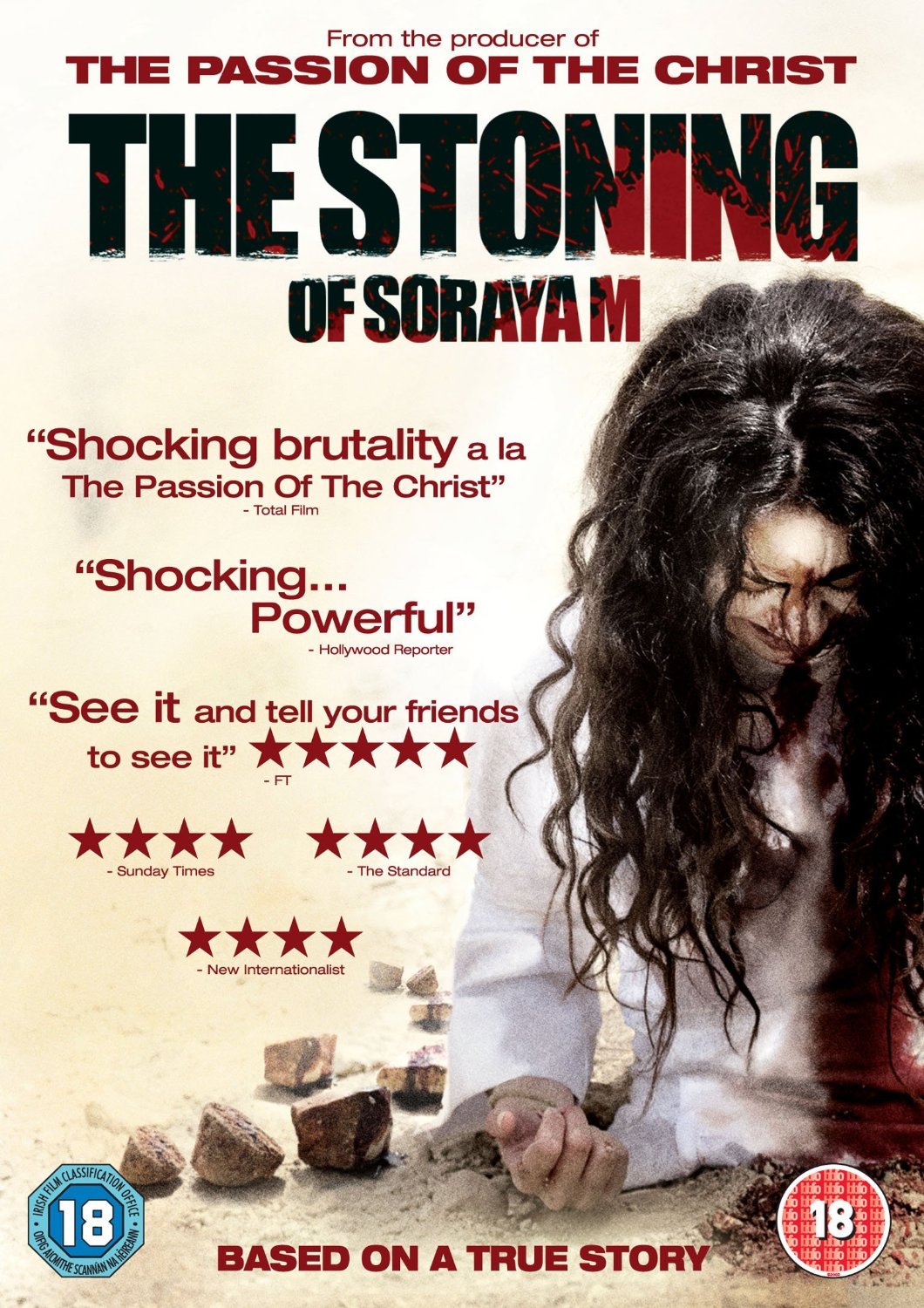
A story told by Zahra to a French journalist of her niece Soraya Manutchehri, a 35-year-old married woman, who received capital punishment and stoned to death because of false accusations in the remote village of Kuhpayeh, Iran, in 1986.