The Holy Mountain Review – 1973 movie.
I’ve watched thousands of films over the years, but very few have left me as bewildered, fascinated, and challenged as The Holy Mountain. Released in 1973 and directed by Alejandro Jodorowsky, this cult classic is one of the strangest films ever committed to celluloid. It’s not a movie that simply tells a story; it’s an experience that assaults the senses, questions reality, and leaves you wondering what on earth you’ve just witnessed.
From the opening scenes, it’s clear that The Holy Mountain isn’t interested in conventional filmmaking. The plot follows a Christ-like wanderer who joins a mysterious alchemist and a group of wealthy disciples on a quest to reach the mythical Holy Mountain and attain immortality. However, describing the plot almost feels pointless because the narrative often takes a back seat to the film’s astonishing visual symbolism.
Every frame feels like a surreal painting brought to life. Jodorowsky fills the screen with bizarre imagery, religious iconography, political satire, and occult symbolism. At times I felt mesmerised, while at others I felt completely lost. Yet that’s part of the film’s appeal. It refuses to hold the viewer’s hand and instead demands interpretation.
What struck me most was how fearless the film is. There are scenes that would never make it into mainstream cinema today. Some are beautiful, some disturbing, and some downright absurd. The film constantly challenges social norms, organised religion, consumerism, and the pursuit of power. Whether you agree with its message or not, there’s no denying its ambition.
Visually, The Holy Mountain remains stunning more than fifty years after its release. The practical effects, costumes, and elaborate set pieces are extraordinary. Despite its relatively modest budget, the film looks more imaginative than many modern blockbusters. Every scene feels meticulously crafted and loaded with hidden meaning.
That said, this is not a film for everyone. Viewers expecting a straightforward narrative may find it frustrating. At times, the symbolism becomes so dense that it borders on incomprehensible. I occasionally found myself questioning whether the film was profound genius or complete madness. Perhaps it’s both.
The final act is particularly remarkable. Without spoiling anything, Jodorowsky delivers one of the most unexpected endings in cinema history, completely dismantling the illusion the film has spent two hours constructing.
Ultimately, The Holy Mountain is a film that rewards patience, curiosity, and an open mind. It’s bizarre, provocative, visually stunning, and unlike anything Hollywood has ever produced. I can’t honestly say I understood every aspect of it, but I can say I won’t forget it.
For lovers of cult cinema, surrealism, and experimental filmmaking, The Holy Mountain is essential viewing. Even if you only watch it once, it’s the kind of film that stays with you long after the credits roll.
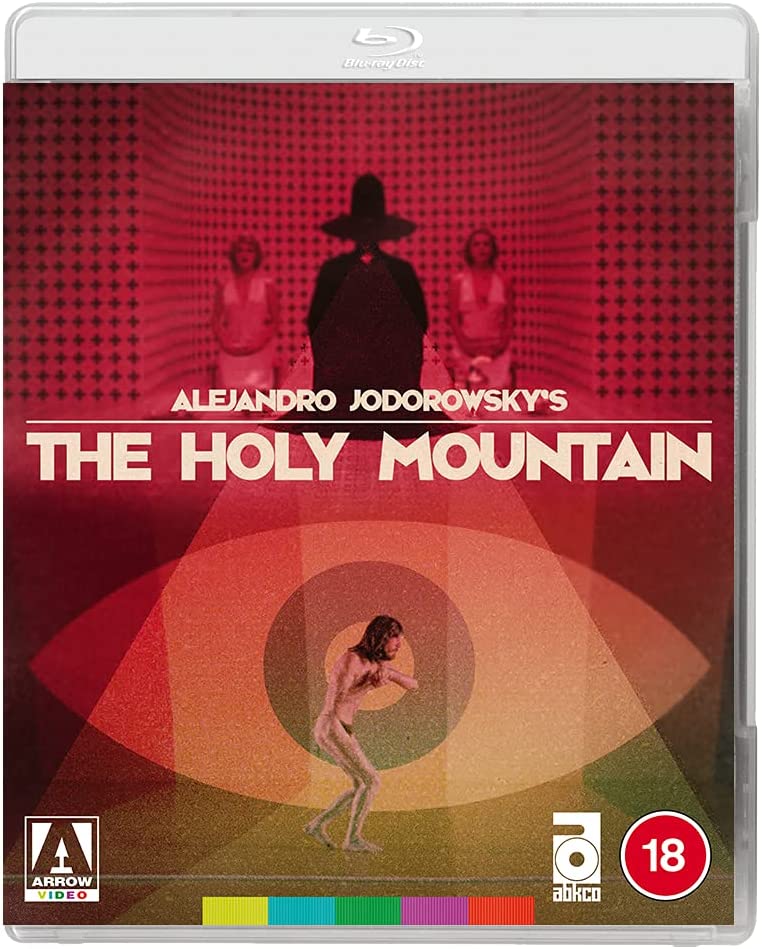
In a corrupt, greed-fuelled world, a powerful alchemist leads a messianic character and seven materialistic figures to the Holy Mountain, where they hope to achieve enlightenment.